The Pocket with Chris Griffin: Why The Most Dangerous Men Are The Most Calm
Most people view the military as a world of rigid rules and following orders. But the reality is that the best military minds aren’t trained to follow scripts—they are trained to control chaos.
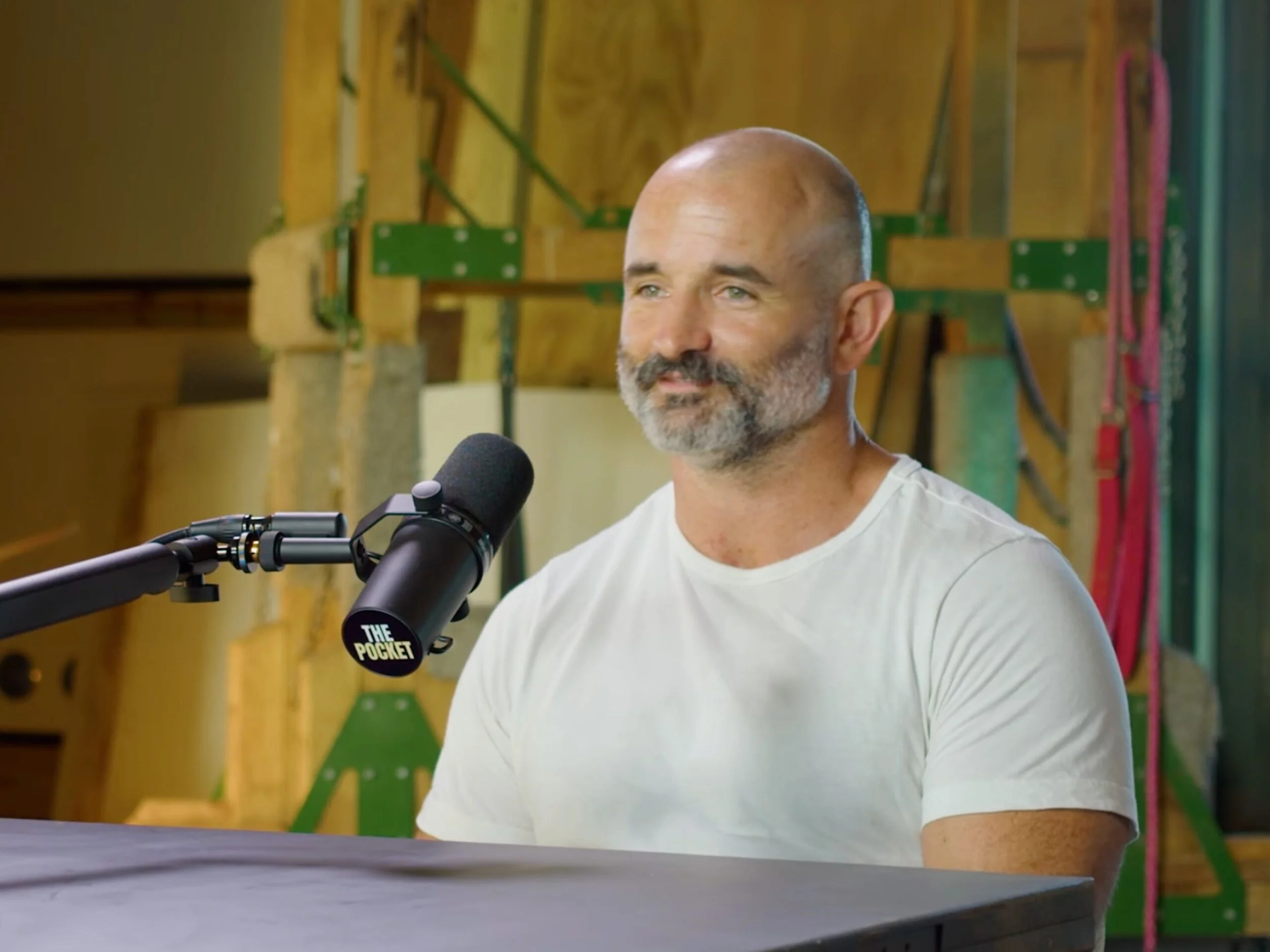
I recently sat down with Chris Griffin on his podcast “The Pocket” to discuss how a decade in the military from the Naval Academy to multiple deployments, prepared me for my current role as GP at Contrarian Thinking Capital. We talked about why comfort is a drug, the power of strategic naivety, and how to build a business with your partner without losing your mind.
In this article is a summary of the core frameworks and lessons we discussed during the show. Keep reading below for more.
Watch The Talk
Watch the full episode below, or click here to watch it on YouTube.
Widening Your Center in Chaos
In the military, they put you in high-stress situations until your heart rate stops spiking when things go wrong. They teach you to make decisions when everything is falling apart.
I call this “widening your center.” Most people have a very narrow window of what they can handle before they freeze or panic. If you’ve been trained on the fringes—among athletes and people with a chip on their shoulder—your window is much wider. What looks like a total crisis to a civilian founder feels like a normal Tuesday to a veteran. That clarity of mind is a massive competitive advantage in business. When everyone else is reacting to the noise, you’re looking for the signal.
Comfort is an Anesthetic
I often tell people that comfort is the most dangerous drug on the market. It’s like a warm hug that slowly paralyzes you.
The reason we see so much innovation coming from people who have nothing is that they don’t have the luxury of being comfortable. They have have to solve the problem. In the West, we are often over-anesthetized by our own success. We stop looking for options because the current one is “good enough.” To win in 0-to-1 entrepreneurship, you have to intentionally step away from the warm hug of safety and embrace the “scar tissue” that comes with growth.
This idea of emotional regulation is central to my practice of jiu-jitsu. I explore this more in Jiu Jitsu.
Strategic Naivety
There is a specific kind of power in not knowing how hard a journey is going to be. I call this “Strategic Naivety.”
If most founders knew exactly how much blood, sweat, and rejection it would take to build a company, they’d never start. Being a little naive allows you to embark on missions that more “sensible” people would avoid. You don’t need a 50-page script; you need the discipline to start and the courage to stay in the game when you hit the “blue belt” phase—the moment you realize exactly how incompetent you actually are. That’s where most people quit, but it’s also where the real skill is built.
Mission Alignment
One of the most frequent questions I get is how Cody and I work together 22 hours a day. The answer is simple: Mission Alignment.
We don’t have to reintroduce ourselves to each other every evening because we’re in the same trenches all day. We have complementary strengths and we leave the ego at the door. In the military, you learn to trust the person next to you because the stakes are life or death. In business, while the stakes are lower, the need for that same level of trust is just as high. When you’re aligned on the “why,” the “how” becomes a lot easier to navigate.
Conclusion
At the end of the day, success comes down to three things: something to do, someone to love, and something to look forward to.
Perspective is everything. If you’re worried about a deal failing or an investor saying no, just remember: no one is going to die. Once you remove the life-or-death stakes, everything in business becomes a game of strategy, endurance, and optionality. The biggest risk you’ll ever take isn’t a financial one; it’s the person you choose to spend your life with. Choose well, protect your options, and never stop chasing the 10-year version of yourself.